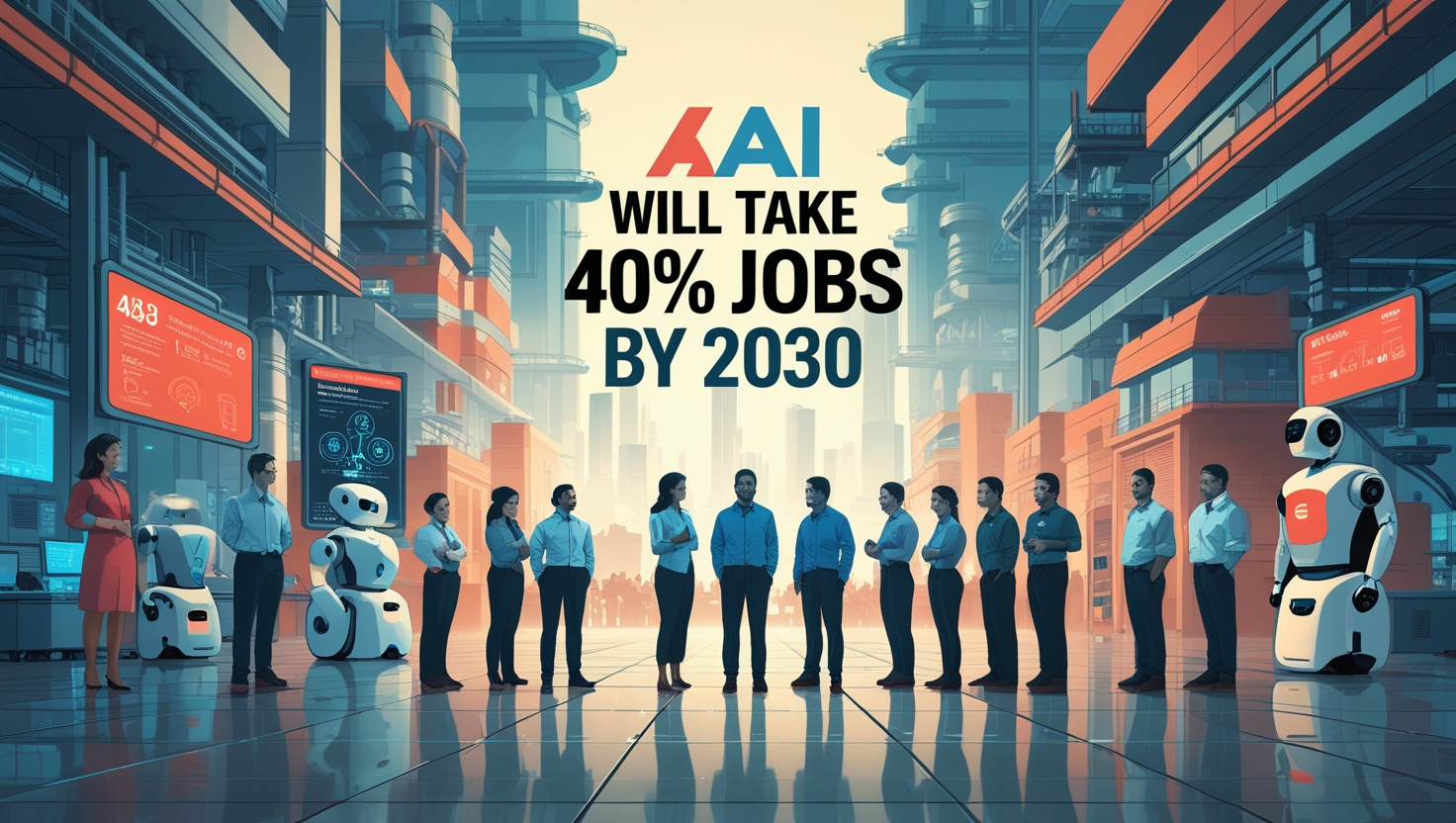
Artificial Intelligence is no longer a futuristic buzzword; it is already shaping industries, redefining careers, and forcing individuals to rethink their professional paths. By 2030, experts predict that up to 40% of existing jobs could be automated or transformed by AI. For Indian graduates, this is both a warning and an opportunity. While some jobs will vanish or evolve beyond recognition, others will emerge, but only for those prepared to adapt. The real crisis is not AI itself, but the lack of readiness among a large section of the youth. In a world where technology moves faster than ever before, staying stagnant is the biggest risk one can take. The challenge is to navigate this shift smartly, and the time to act is now.
The New Reality – AI is here to stay:
AI is one of the fastest-growing fields in the world today, and unlike temporary market trends, it is not going anywhere for at least the next decade. Its growth is steady, disruptive, and inevitable. Whether it’s automating repetitive tasks, processing massive datasets, or providing advanced analytics, AI is becoming deeply embedded in how businesses operate. From chatbots in customer service to AI-powered medical diagnosis, the technology is taking over functions that were once entirely human-led. This means the shift in job requirements is not temporary but permanent. Indian graduates need to realize that this is not just a passing phase; it is a structural change in the global economy.
Delaying action will only make it harder to catch up later. Technology adoption curves show that early adopters enjoy the maximum benefits, while latecomers struggle to compete. Right now, AI is still young enough that learning and adapting to it can put you ahead of the curve. But in five years, this advantage will shrink dramatically. The decision you make today about AI could define your professional relevance for the next decade.
Transitioning Without Risking It All:
One of the most common mistakes young professionals make is abruptly quitting their jobs or dropping out of their studies in pursuit of AI careers without a plan. While the passion to switch to a booming field is commendable, doing so without preparation can lead to financial instability and career setbacks. The smarter approach is to transition gradually. Start with AI-related online courses or certifications that match your current field. For example, if you are in marketing, learn about AI in digital advertising or predictive analytics. If you are in finance, explore AI-based risk modeling or fraud detection.
Once you have a foundational understanding, look for internships, freelance projects, or part-time roles to gain hands-on experience. Over six to twelve months, this will help you build both a portfolio and practical skills. This step-by-step integration will not only make you more employable but will also reduce the fear of the unknown. The beauty of AI being a young field is that you don’t have to make a risky leap you can integrate it into your career slowly and strategically.
The Student’s Approach: Treat Your Degree like a Job:
If you are still in college, think of your education as your full-time job. Dedicate the same seriousness and discipline to your classes as you would to paid work. This means attending lectures, submitting assignments on time, and taking exams seriously, but also going beyond the curriculum. Once your academic commitments are done for the day, devote your remaining time to learning AI tools, programming languages like Python, or data analysis techniques.
Use weekends and semester breaks for projects, hackathons, or collaborative research with peers. Participate in AI competitions on platforms like Kaggle to test your skills in real-world problem-solving. Every hour spent on building AI expertise now will pay off exponentially later. Avoid wasting time on endless gaming sessions, aimless video scrolling, or activities that do not contribute to your long-term growth. The truth is simple: those who fall behind in AI adoption now may never fully catch up, because the gap between skilled and unskilled will widen at lightning speed.
The Myth of “AI Will Replace Every Job”:
While AI is incredibly powerful, it will not replace every role. Certain careers will remain largely untouched because they require human empathy, creativity, or physical presence. Professions like mental health counseling, psychiatry, and general medicine demand emotional intelligence and patient-to-patient trust, something machines cannot replicate. Similarly, fields like event management, public relations, and hospitality rely heavily on personal connections and face-to-face interaction, which cannot be automated without losing their essence.
In the domain of physical labor, roles such as plumbing, electrical work, and mechanical repairs will still require skilled human hands. AI might assist these workers with tools or diagnostics, but the execution will remain human-driven. These safe zones, however, are not an excuse for complacency. Even in these industries, AI will enhance productivity, and those who learn to work alongside it will outperform those who ignore it entirely.
Government Jobs – The Unexpected Winner in the AI Era:
Interestingly, the rise of AI could drive more people towards government jobs. As automation threatens job security in the private sector, the stability of government employment will become more attractive. Whether AI is used within these jobs or not, the assurance that they won’t be eliminated overnight will be a major draw. For those seeking long-term stability rather than the volatility of private markets, this might be a viable career path.
However, competition for these roles is likely to increase sharply, so preparation will need to start early. Entrance exams will get tougher as more candidates try to secure these stable positions. The irony is that AI may end up making certain government jobs more efficient, but it will also make them harder to get into because demand will surge. Those who are serious about this route need to treat preparation as a multi-year strategy, not a last-minute backup plan.
The Permanent Shift – India’s Advantage and Challenge:
The AI revolution is not a short-term event; it’s a long-term transformation. The speed at which it is unfolding means that the gap between adopters and laggards will widen quickly. India, however, has a unique advantage a young population where the 18–30 age group dominates. This demographic is tech-savvy, adaptable, and capable of learning new skills faster than older workforces.
If Indian youth embrace AI as a career enabler, they could replicate the IT boom of the early 2000s on a much larger scale. This would position India as a global hub for AI talent, serving businesses and industries worldwide. The IT revolution saw India become the back office of the world; the AI revolution could make it the brain of the world. But this will only happen if graduates take responsibility for their learning, instead of waiting for universities or employers to push them.
The Call to Action: Adapt or Be Left Behind:
The question is no longer whether AI will impact your career; it’s how much. Those who ignore this reality risk being left behind in a rapidly changing economy. The transition to an AI-driven world requires commitment, continuous learning, and strategic planning. Whether you choose to work in a sector heavily influenced by AI or one that remains relatively unaffected, you must make that choice consciously.
The winners of the AI era will be those who act early, learn consistently, and position themselves where technology enhances rather than threatens their work. This is not about becoming an AI engineer overnight; it’s about understanding AI enough to leverage it in your profession. From teachers who use AI to personalize lessons to lawyers who use it for faster case research, those who integrate AI into their work will remain relevant. Those who don’t will be forced to play catch-up in an unforgiving job market.
Conclusion:
The AI revolution is rewriting the rules of employment. By 2030, 40% of jobs could be transformed or eliminated. Indian graduates have a limited window to prepare for this change. The solution lies in proactive skill-building, gradual career transition, and strategic selection of fields. AI is not the enemy; complacency is. Those who recognize this shift and embrace it will not only survive but thrive in the new economy. The real crisis is not AI itself, but whether you are ready to meet it head-on. In the end, the future belongs to those who build it and in the AI era, building starts with learning.
FAQs:
1. Will AI replace 40% of jobs by 2030?
Experts predict that up to 40% of existing jobs could be automated or transformed by AI by 2030. While some roles will disappear, many others will evolve, and entirely new ones will emerge. The real challenge is preparing for this shift in time.
2. Should graduates switch to AI careers immediately?
Not necessarily. The blog recommends a gradual transition—starting with AI-related courses, certifications, and small projects—before fully committing. This approach reduces financial and career risks while building valuable skills.
3. Are there careers that AI cannot replace?
Yes. Roles requiring human empathy, creativity, and hands-on skills, such as mental health counseling, event management, plumbing, and electrical work, will remain largely human-driven. However, AI will still enhance productivity in these fields.
4. Why might government jobs become more attractive in the AI era?
As automation threatens private sector job security, the stability of government jobs will draw more candidates. This will increase competition, making early and focused preparation essential.
5. What is the biggest risk for Indian graduates in the AI revolution?
The biggest risk is complacency, ignoring AI’s impact and failing to adapt. Those who act early, learn consistently, and integrate AI into their profession will remain relevant, while late adopters will struggle to catch up in a fast-changing job market.